
The AI Revolution in Private Equity: How Investment Firms Are Gaining the Competitive Edge
The Analyst’s Edge Is Shifting, Is Your Team Ready?

Ten years ago the star first-year analyst was the one who could finish a leveraged buyout (LBO) model at 2am. Today the edge isn’t brute-force Excel speed; it’s how quickly your team can turn messy, unorganized data into a conviction-ready thesis with AI as their copilot.
The shift is fundamental. Over the past six months, we’ve spoken to 150 managing partners, investment principals, and portfolio-operations leads at investment management funds. About 50% aim to launch a live AI workflow within 3 months, 30% target the 6-month mark, and the final 20% expect to cross the line within 12 months.
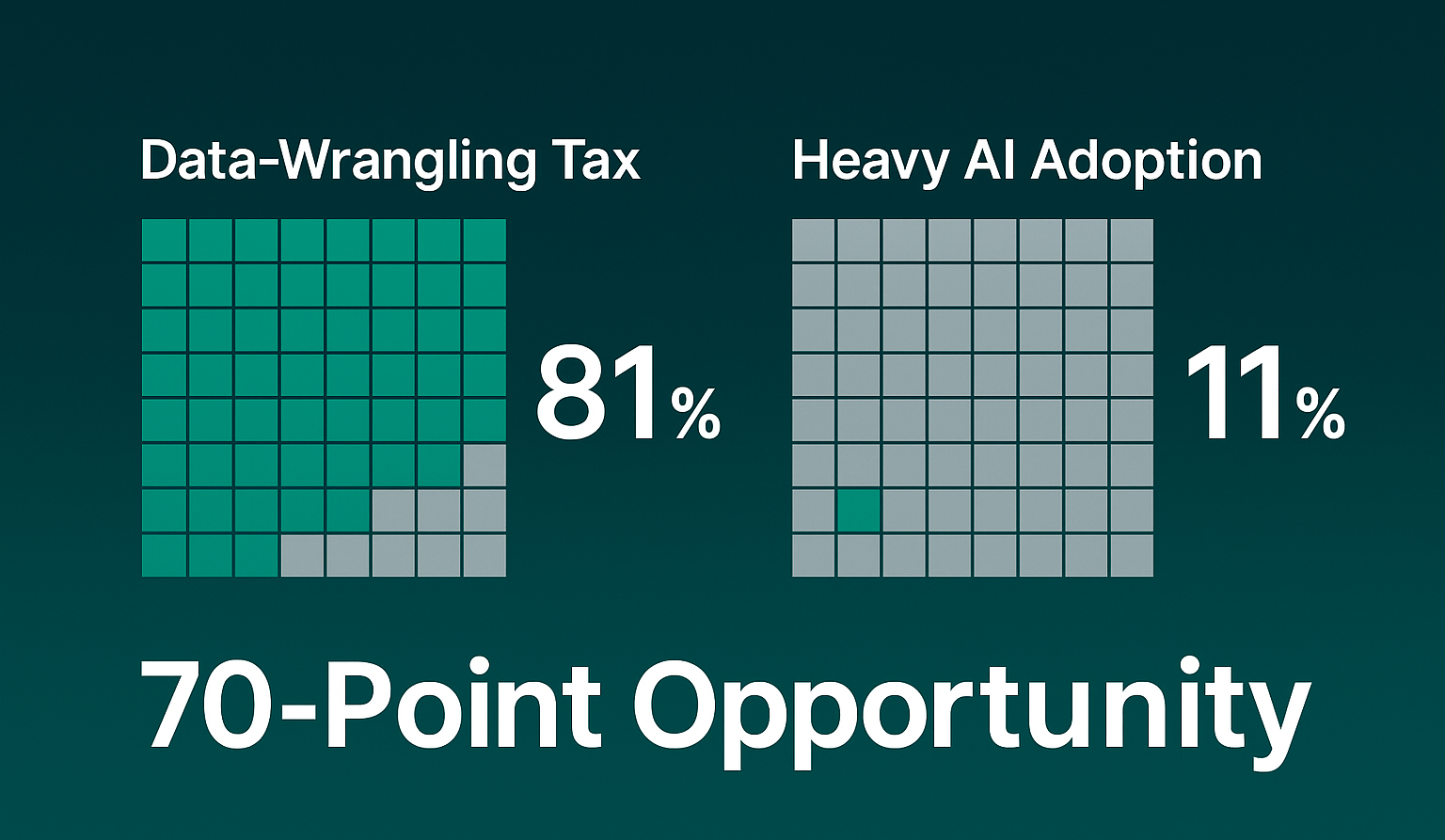
Our research highlights a big inefficiency:
-
The “Data Wrangling Tax”: 81% of these leaders say their analysts still spend half the week wrangling unstructured PDFs, data-room exports and call transcripts. Investment professionals spend the majority of their workday on manual document processing and data extraction, highlighting the urgent need for such solutions. With AI introduction, firms are saving significant amounts of time and resources, leading to value creation for clients by enhancing workflow efficiency. AI can also help manage the denominator effect across asset classes, including private capital and other asset classes, by providing more timely and accurate valuations that support better portfolio rebalancing and allocation.
-
A Costly Delay: This isn’t just an inefficiency; it’s a tax on the insight no firm can afford when deals move in hours, not days. AI can help firms quickly adapt to changing market conditions by providing real-time insights and analysis, enabling more agile investment decisions.
-
The AI Utilization Gap: Despite the clear pain point, only 11% of asset management firms say their current AI use is “heavy”. This big gap presents a huge opportunity for firms embracing AI-driven workflows. The runway for outsized returns is still open.
1. The New Era of AI in Investing
The financial sector is entering a new era, with private equity (PE) firms at the forefront of technological transformation. Artificial intelligence tools are now integral to how PE firms approach sourcing, portfolio management, and risk management. As AI introduction accelerates across the industry, PE firms that embrace these technologies are gaining a clear edge. Regulatory bodies favor more transparency and frequent valuations as PE firms opens up to retail investors, further emphasizing the importance of robust AI-driven processes. However, realizing the full potential of AI requires a thoughtful approach to implementation, ensuring that the benefits of enhanced efficiency and insight are balanced with the unique challenges of integrating new technology into established workflows.
2. What Every Analyst Needs to Know
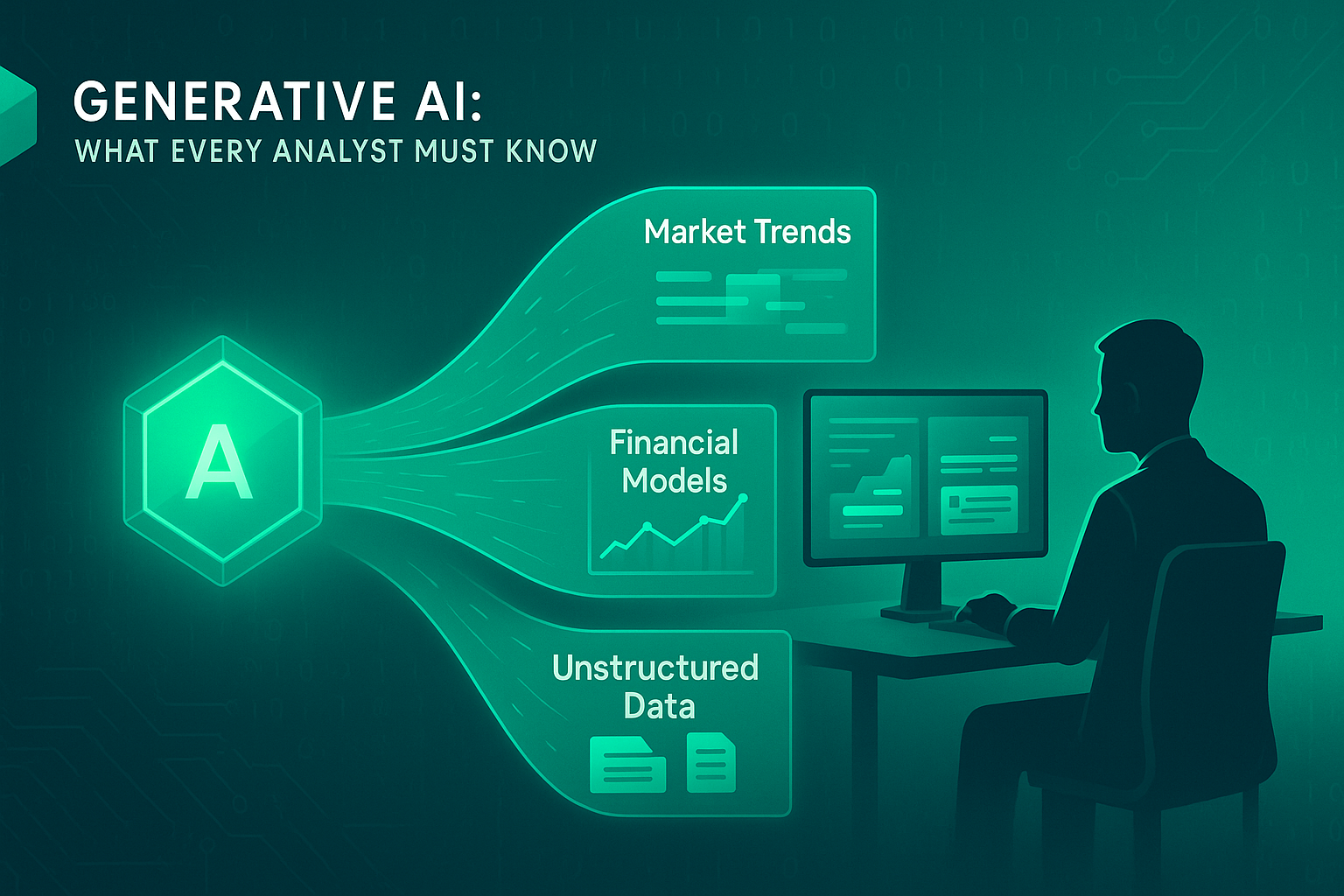
Generative AI represents a powerful evolution in artificial intelligence, enabling machines to create new content—such as text, images, and even financial models—based on the data they’ve been trained on. For analysts in PE firms, it is more than just a buzzword; it’s a practical tool for uncovering structured and unstructured data like market trends, identifying investment opportunities, and streamlining core processes. Generative AI is also increasingly used in venture capital, where it supports deal sourcing, evaluation of startups, and early-stage investment decisions by providing AI-driven insights throughout the investment lifecycle. By harnessing generative AI, analysts can automate time-consuming tasks, freeing up bandwidth for higher-level work that demands human insight. However, it’s crucial for analysts to understand both the capabilities and limitations of generative AI.
3. The Shifting Landscape Shaped by AI
The private equity industry is experiencing a profound shift as artificial intelligence becomes a core driver of innovation and performance. PE firms are increasingly turning to generative AI models to transform how they manage investments, evaluate portfolio companies, and uncover new opportunities. By harnessing the power of machine learning and NLP, PE firms can analyze vast amounts of data—from financial statements to LinkedIn to social media posts—at a speed and scale that was previously unimaginable.
One of the most significant trends is the use of generative AI to identify market trends and assess company performance. These advanced models can surface key financial metrics, such as revenue growth and profitability, by parsing through financial reports and supplementary data sources. Sentiment analysis, powered by AI, is also gaining traction, enabling firms to gauge market sentiment and anticipate shifts in investor behavior or industry trends.
Risk management is another area where AI is making a substantial impact. Private equity firms are leveraging AI tools to enhance credit risk assessment, optimize portfolios, and proactively identify potential vulnerabilities within their investments. Real-time investment performance tracking enables private equity and venture capital teams to quickly identify underperforming assets and adjust strategies.
As the adoption of AI accelerates, the competitive landscape in private equity is being reshaped. Portfolio management firms that embrace these technologies are better positioned to make informed investment decisions, drive superior performance in their investments and portfolio companies, and stay ahead of evolving market conditions. AI-driven predictive analytics helps private equity firms forecast asset performance and optimize investment strategies, further enhancing their ability to deliver value. The integration of AI into the PE industry is not just a trend—it’s a fundamental transformation that is setting the stage for the next era of value creation.
4. The AI-Driven Private Equity Firm
As AI adoption deepens, PE firms are reimagining their operating models to harness the full potential of artificial intelligence. Robust AI architecture is being built to support the seamless integration of AI tools into daily workflows, enabling teams to process financial reports, perform sentiment analysis, and monitor portfolio companies with unprecedented speed and accuracy. This transformation is not just about automating routine tasks; it’s about empowering investment professionals in private capital to focus on high-value activities such as strategic decision making, relationship building, and identifying new investment opportunities.
The productivity gains realized through AI-driven workflows are significant. Analysts and most portfolio company executives can now devote more time to value creation, leveraging AI-generated insights to optimize key performance indicators and drive growth across portfolio companies. Enhanced financial reporting and real-time monitoring allow private equity firms to stay ahead of market trends and respond swiftly to changing conditions, securing a lasting edge in the private markets.
However, this transformation also brings new challenges and significant risks. The increased reliance on AI models introduces model risks and credit risk, making it essential for PE firms to implement rigorous validation processes and maintain transparent, responsible use of AI solutions. Investment firms must ensure that AI solutions align with existing operational workflows to avoid employee resistance and inefficiencies, which can otherwise hinder the adoption and effectiveness of these technologies.
5. Deal Sourcing and Due Diligence
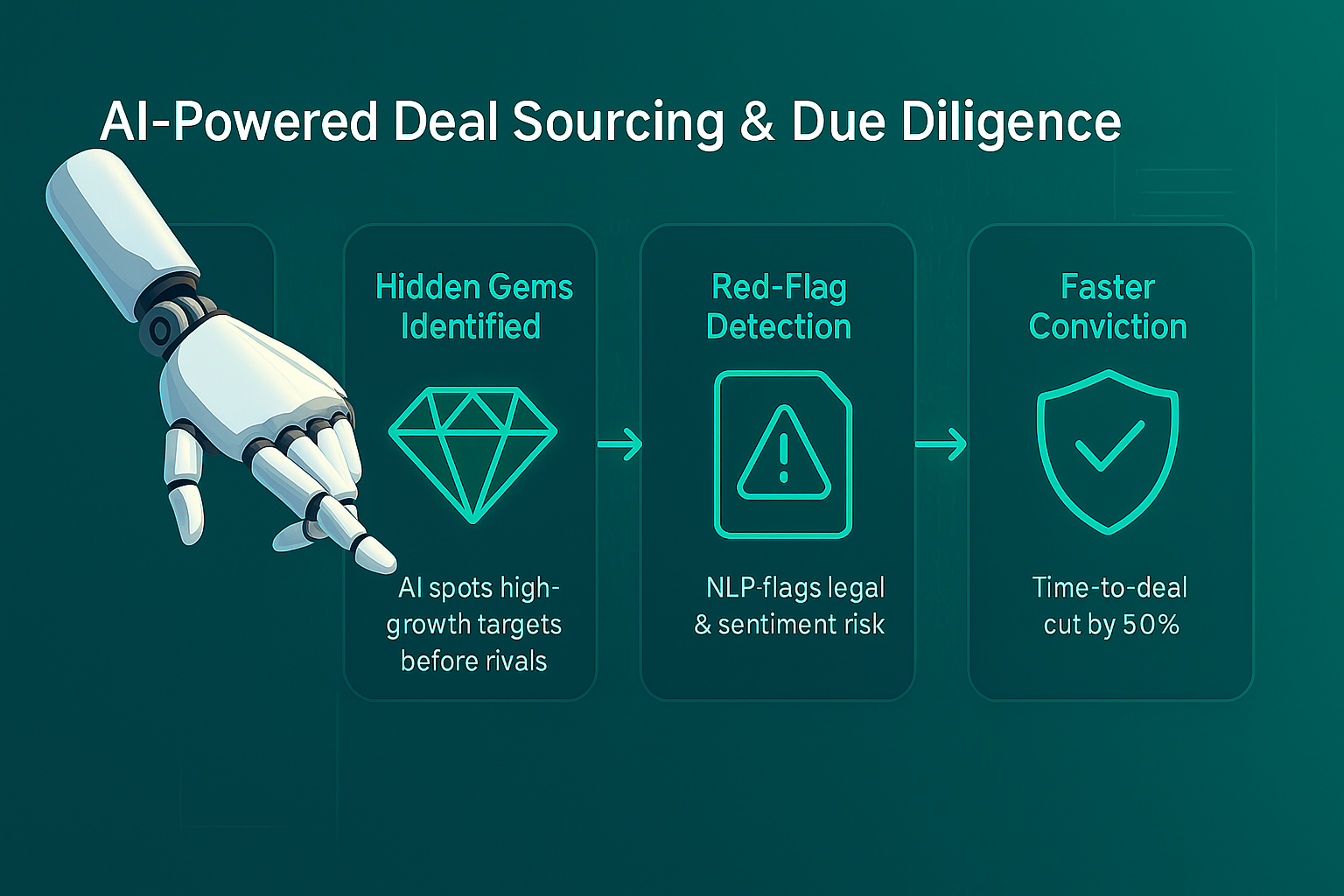
Deal sourcing and due diligence are at the heart of private equity’s value creation engine, and artificial intelligence is rapidly redefining what’s possible in these critical stages. AI tools are streamlining deal-sourcing processes by uncovering hidden opportunities and high-growth companies through big data analysis. This enables firms to uncover hidden gems and gain a competitive edge. By leveraging natural language processing, AI can sift and flag potential risks or red flags that might otherwise go unnoticed during traditional due diligence.
AI-powered deal sourcing means private equity firms can spot emerging market trends and investment opportunities faster than ever before, often surfacing hidden gems that manual processes would miss. Generative models can also analyze alternative data sources, such as customer feedback, sentiment analysis, legal contracts and regulatory filings, providing a more holistic view of a potential portfolio company’s strengths and vulnerabilities. This in-depth analysis not only improves risk management but also supports smarter decision making throughout the investment lifecycle.
By integrating AI tools into their deal sourcing and due diligence workflows, PE firms are reducing the risk of missed opportunities, accelerating time-to-conviction, and driving immense value for both their investors and portfolio companies. The result: more informed investments, greater revenue growth, and a sustainable edge in an increasingly competitive market.
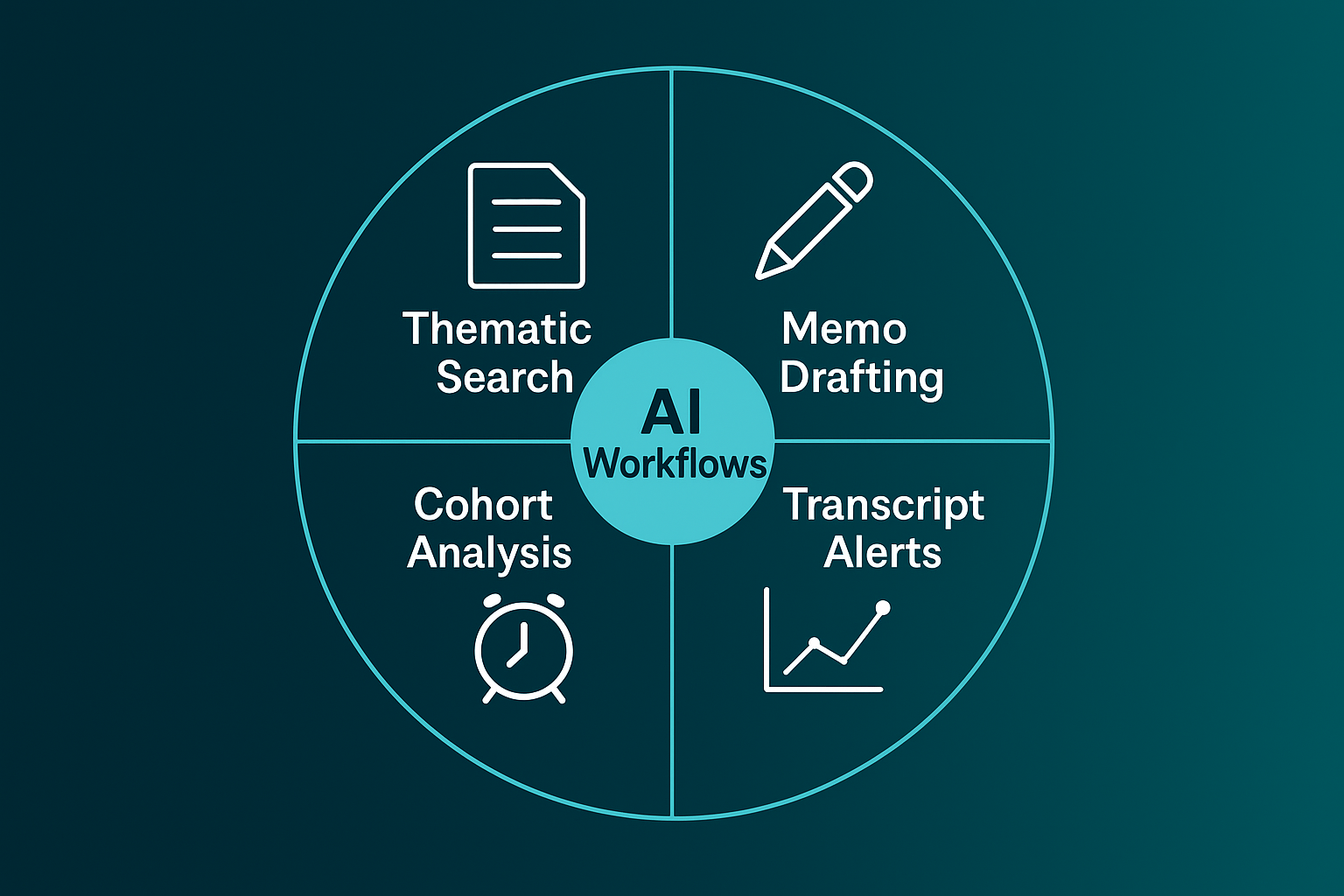
6. The AI-Ready Analyst Workflow
For PE firms aiming to lead in today’s data-driven environment, building an AI-ready analyst workflow with new technologies is no longer optional—it’s essential. Integrating next-generation AI tools, such as generative AI models, NLP, and machine learning algorithms, empowers analysts to elevate every stage of the investment management process. With these technologies, analysts can rapidly process and synthesize information from financial statements, market research, and news articles, uncovering key performance indicators and actionable insights that drive smarter portfolio management.
Generative AI tools are revolutionizing due diligence and financial analysis, including document analysis, by automating the extraction and analysis of critical data points, allowing analysts to focus on high-value activities like investment strategy and value creation. AI models can quickly identify trends and anomalies across portfolio companies, supporting more robust decision insights and enabling private equity firms to respond swiftly to changing market dynamics.
To fully realize these benefits, PE firms must invest in robust AI infrastructure, including advanced data management systems and secure AI software platforms. Training analysts to effectively use these tools for deal flow is equally important, ensuring teams can leverage AI capabilities while maintaining oversight of platform risks and data privacy. Establishing clear operating models and governance frameworks is crucial for integrating AI into daily workflows and safeguarding against potential pitfalls.
By embracing an AI-ready workflow, private capital firms can unlock new levels of workflow optimization, enhance the performance of their portfolio companies, and secure a lasting competitive advantage in the evolving landscape of private equity investments. Effective communication strategies and collaboration with AI specialists are essential for successful AI implementation, ensuring analyst teams embrace new tools and workflows while minimizing resistance. This is the new competitive edge.
7. Challenges of AI Implementation
While the promise of artificial intelligence in private equity is immense, the path to successful AI adoption is not without obstacles. One of the primary challenges investment management firms face is the lack of standardized data management. Inconsistent, incomplete, or inaccurate data can undermine the effectiveness of even the most advanced AI tools, making it essential for firms to invest in robust data governance from the outset. The SEC has increased compliance requirements for private fund advisers, including performance reporting and audit reporting, adding another layer of complexity to the adoption of AI in private equity.
Building the right AI infrastructure is another significant hurdle. Private equity firms must ensure they have the necessary hardware, software, and technical expertise to support the processing and analysis of large, complex datasets. Integrating AI into existing operating models often requires a fundamental rethink of business processes and workflows, which can be disruptive and resource-intensive.
Compliance with financial regulations adds another layer of complexity. As AI systems become more deeply embedded in decision making, private equity firms must ensure that their AI tools adhere to all relevant legal and regulatory requirements, including data privacy and cybersecurity standards. Model risks—such as algorithmic bias or unexpected system behavior—must also be carefully managed to maintain trust and integrity in AI-driven processes.
Despite these challenges, the benefits of AI adoption across various asset classes—enhanced operational efficiency, improved decision making, and a stronger competitive position—are driving more private equity firms to invest in artificial intelligence. However, the high cost of developing and maintaining AI solutions can deter private equity firms from successful implementation. By proactively addressing these roadblocks, firms can unlock the full potential of AI and position themselves for long-term success in the private markets.
8. Best Practices for AI Adoption and Q&A with Pascal AI
To fully realize the benefits of artificial intelligence, private equity firms must take a strategic approach, one that prioritizes both technology and talent. Building a future-ready team starts with hiring AI experts, data scientists, and professionals skilled in machine learning and natural language processing. But it doesn’t stop there: ongoing training and upskilling are essential to ensure that all team members can work effectively with new AI tools and adapt to evolving technologies. Establishing clear protocols for data management, model validation, and risk assessment is critical for maintaining the integrity and reliability of AI-driven processes. Private equity firms should foster a culture of innovation, encouraging teams to experiment with new AI applications and continuously seek out productivity gains and operational efficiencies.
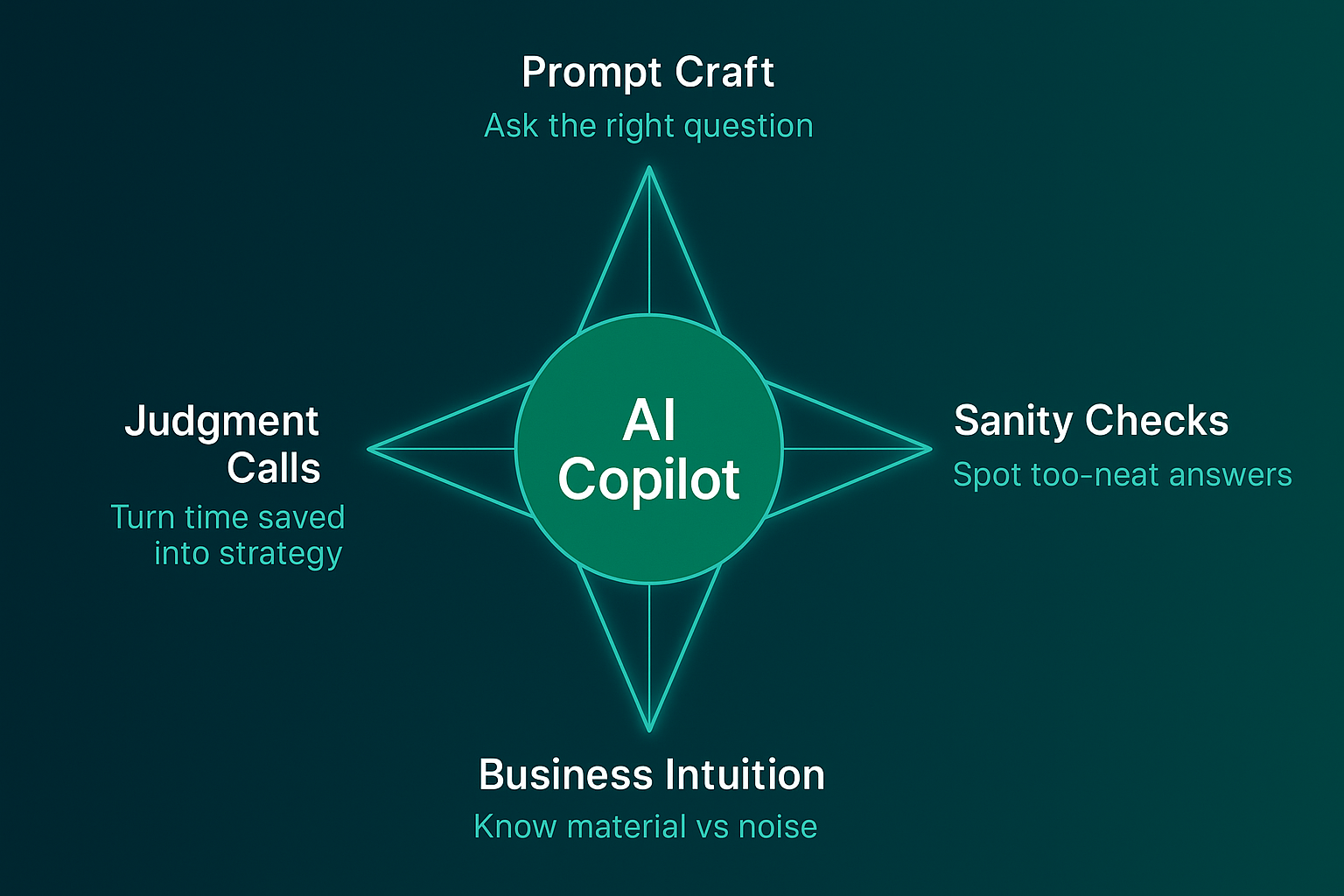
Importantly, the most successful private equity firms recognize that human judgment remains at the core of effective decision making. AI tools should be used to augment and support analysts, not replace them. By combining the analytical power of artificial intelligence with the strategic insight and intuition of experienced professionals, private equity firms can achieve superior outcomes, unlock new investment opportunities, and maintain a decisive edge in a rapidly changing industry. Many private equity organizations lack the in-house expertise needed to effectively deploy AI technologies, leading to talent and skills gaps that must be addressed through strategic hiring and training initiatives. By following these best practices, private equity firms can navigate the complexities of AI adoption, drive significant value for their portfolio companies, and secure their place at the forefront of technological innovation in the private equity industry.
Q1: Is Generative AI safe with numbers?
General models can sometimes “hallucinate” with numerical data. However, when paired with a rules-based validator that cross-checks outputs to source pages, over 99% of these hallucinations disappear. The key is implementing robust validation layers, a core component of trusted AI systems for finance.
Q2: Why not just hire more juniors?
Junior analyst compensation rose 18% Year-over-Year last year. While headcount is a linear addition, the technology scales exponentially. AI tools provide leverage across your entire team, not the equivalent linear increase in operational costs and management overhead of hiring.
Q3: Will AI kill analyst judgment?
No. AI’s role is to collapse the time spent on data retrieval, aggregation and initial synthesis. This frees analysts to spend more cycles on the “so-what”, interpreting insights, applying business intuition, developing conviction and making high-level strategic judgments that drive deals.
Q4: How do we ensure data security and privacy when using AI with sensitive financial data?
Financial data is a big concern especially in asset management. Leading AI solutions for finance are built with enterprise-grade security, data anonymization and strict compliance protocols. When evaluating tools, especially for financial reporting always prioritize those with robust security frameworks, on-premise deployment options, secure cloud environments and clear data governance policies. This is a core focus at Pascal.
Contact
USA
228 Park Ave S PMB 55152, New York
UK
86-90 Paul Street, EC2A 4NE, London
India
Indiqube Edge, ORR, Bangalore
Copyright © 2026 | All Rights Reserved
This site is protected by reCAPTCHA and the Google Privacy Policy and Terms of Service apply.