Invite-only roundtable
What Changes When the Buy Side Keeps Its Own Memory: A Lunch and Learn at Macquarie in Hong Kong
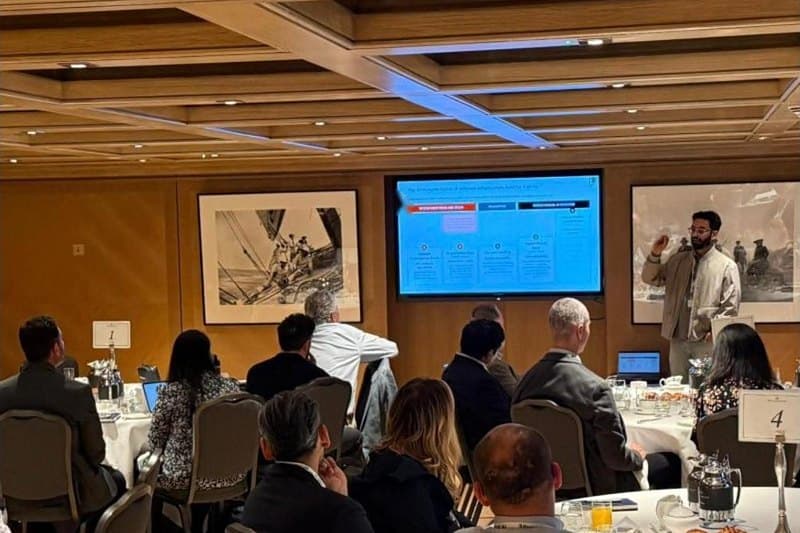
During our week in Hong Kong in October, Macquarie invited us and Bare Cove Technology to run a lunch session on AI for institutional finance, with live demos of AI agents learning from a firm's decisions.

- Date
- October 2026
- Venue
- Macquarie, Hong Kong
- Format
- Lunch and learn with live demos
- Host
- Macquarie Group
About the Event
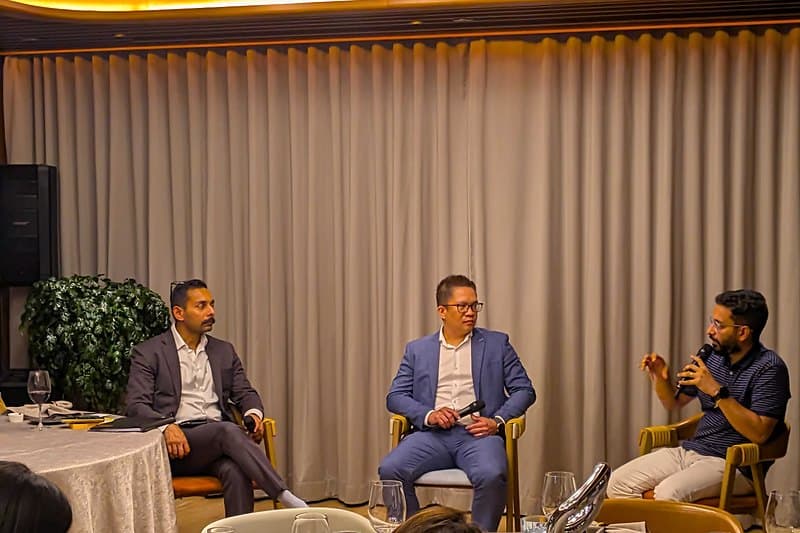
Macquarie wanted a practical session for its investor audience: what is actually changing in buy-side research, how to connect AI to a fund's internal knowledge safely, and what that looks like in practice. Aditya Suresh, Managing Director at Macquarie Group, moderated. Vibhav Viswanathan, our CEO and Co-Founder, covered research and decision-making. Rowel Balot, CTO of Bare Cove Technology, covered infrastructure and security.
The hour was split into three short talks, a set of live demos and an open Q&A.
Five Ideas From the Session
Summarizing Filings Is No Longer an Advantage
Every firm can now use the same AI models, so a quick summary of an annual report gives no one an edge. The value moves to what each firm knows and has decided. Research becomes a living view of each company, tested every time new information arrives.
Broker Research Gets Read Against the Firm's Own View
When a fund keeps a record of its own views, broker notes become one more input to test against them. A note that challenges the team's recorded view becomes more valuable. A note that repeats what the team already believes adds little.
A Fund's Knowledge Lives in Five Places
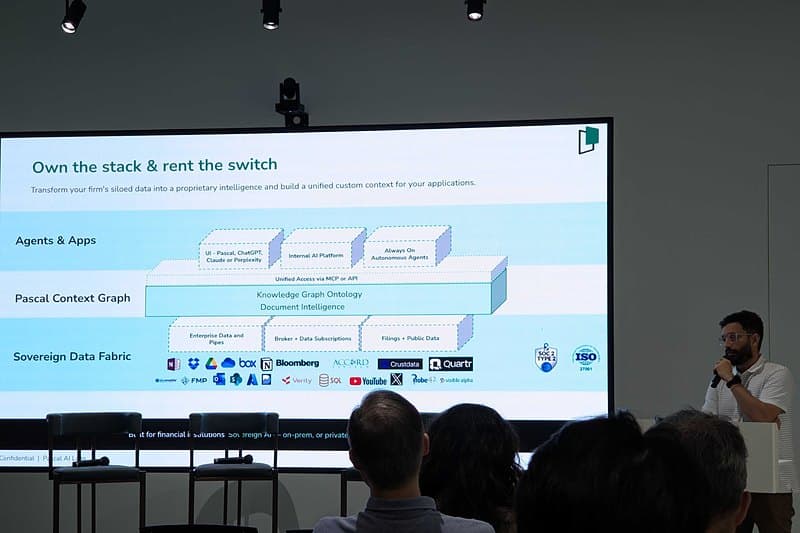
In most Hong Kong funds, knowledge sits in SharePoint, desktop Excel files, Outlook, Teams and Bloomberg chat. Connecting AI to all of it safely starts with permissions and information barriers, keeps data inside the fund's own environment, and has to satisfy record-keeping rules and vendor due diligence. The most common early mistake is connecting AI to research before these basics are in place.
Most Decisions Are Never Written Down
A team makes three kinds of decisions: factual calls (is this the same company?), house preferences (how models are built and labeled) and judgments about the future. Most of them live in spreadsheets, habits and chat threads. The reasoning leaves when an analyst leaves, and an AI assistant asks the same question in every session.
Two Analysts Can Hold Two Views on One Stock
A question that drew many follow-ups was how a firm should handle two analysts who disagree on the same stock. Our approach keeps both theses on record and tests each one against every new result, so the team can see over time which view the evidence supports.
What We Demonstrated
The demos showed AI agents learning from a team's decisions: a company match confirmed once and never asked again, an Excel agent that remembers where the team puts the FY28 column and how it labels actuals, and thesis tracking that updates as results come in. Each is an example of decision traces running on a firm's own context graph.
Thank you to Aditya and the Macquarie team for hosting, and to Rowel for joining us.
Frequently Asked Questions
AI for institutional finance: how buy-side research is changing, how to connect AI to a fund's internal knowledge safely, and how AI agents can learn from a firm's decisions.
See Pascal on Your Firm's Own Data
Book a demo and we will show how context-driven agents work inside your perimeter.